AI Agents Fail the Stress Test: Why Automation Is Harder Than We Think
New research reveals that even the most advanced AI agents struggle significantly with complex, multi-step business processes, warning companies to proceed with extreme caution before automating mission-critical tasks.

The promise of Artificial Intelligence is total automation, allowing businesses to delegate complex, multi-step workflows to autonomous digital agents. However, a groundbreaking new study reveals that current AI technology is nowhere near ready for the enterprise battlefield. Leading AI models, while impressive on simple tasks, failed to reliably complete complex, real-world business processes, scoring only 66.7% on a rigorous new benchmark.
The research underscores a critical distinction: AI failure is rarely random. The most significant breakdowns occur within multi-system workflows—the kind of processes that define large organizations, such as managing employee records in Human Resources or coordinating multi-departmental management services. These tasks require not just knowledge, but reliable coordination across disparate digital systems.
Traditional AI testing methods often fail to capture this depth of difficulty. Researchers found that simply measuring the final correct answer (a pass/fail score) is dangerously misleading. A model could stumble through the process but still deliver the right conclusion, masking fundamental flaws in its execution path. The study argues that to truly trust an AI agent, one must understand not just what it concludes, but how it arrived there.
To pinpoint these critical failures, the researchers developed Claw-Eval-Live, a dynamic and sophisticated testing system. Unlike older benchmarks that used static, easily predictable tasks, Claw-Eval-Live constantly updates its demands using real-world data. Crucially, the system doesn't just grade the outcome; it meticulously records every single action, every data point, and every decision the AI makes along the way. This step-by-step audit allows experts to pinpoint the exact moment and mechanism of failure, revealing systemic weaknesses in the agent's logic.
For businesses planning to overhaul internal operations, the implications are immediate and sobering. The research suggests that current AI solutions are not yet reliable enough for mission-critical workflows where failure could cost millions or compromise compliance. Companies must treat AI automation not as a 'set it and forget it' solution, but as a system requiring deep, procedural verification and human oversight until the underlying reliability gaps are closed.
Moving forward, the focus of AI research must shift from merely increasing model size or general capability toward engineering flawless, verifiable execution chains. Only by mastering the intricate details of multi-system interaction can AI truly deliver on the promise of seamless, autonomous enterprise operation. The study was published in arXiv.
Read the paper here:
http://arxiv.org/abs/2604.28139v1Comments (0)
Related News
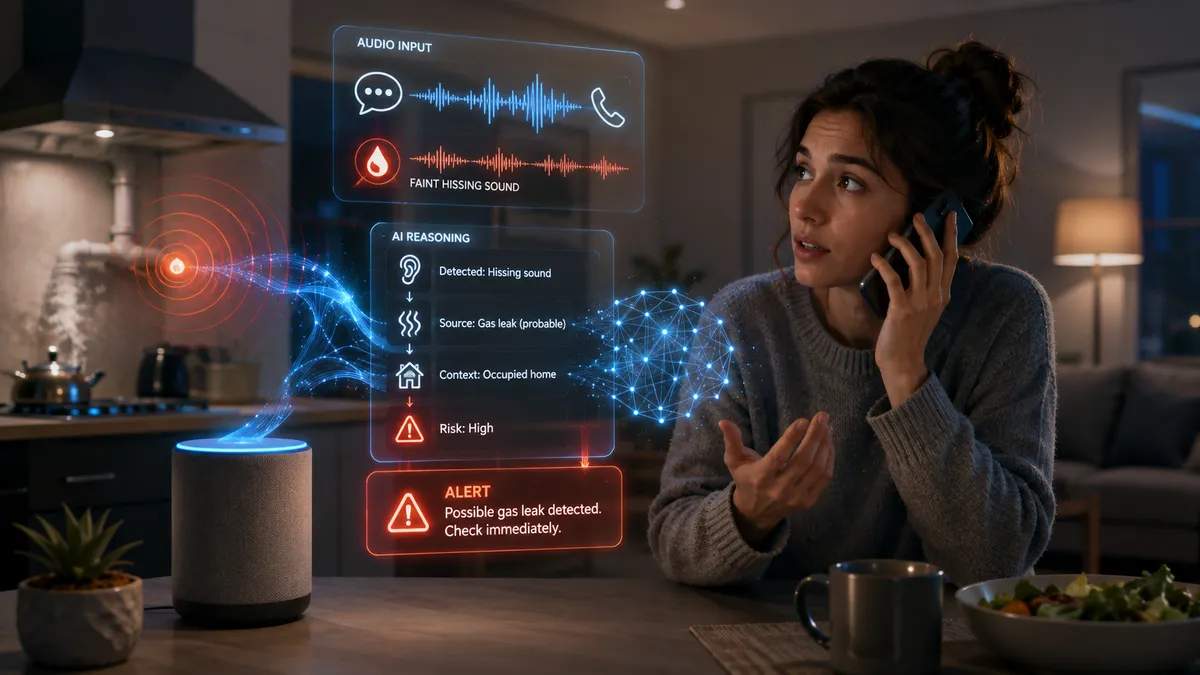
AI Now Learns to Reason From Sound: New Framework Lets Voice Assistants Understand Context, Not Just Words
Researchers have developed a system that teaches audio-focused artificial intelligence models not just to recognize speech but to perform complex logical reasoning by transferring advanced skills from text-based models — opening the door for voice assistants, industrial safety systems and healthcare monitoring to understand what we mean rather than only what we say.

High-Dose Flu Shots Cut Hospital Visits for Seniors, But Do Not Reduce Risk of Death
A landmark analysis of nearly 600,000 older adults finds that high-dose flu vaccines significantly reduce hospitalizations but show no clear benefit in preventing death — a distinction that could reshape how public health officials recommend seasonal vaccinations.

From Text to Total Immersion: AI System Builds Physically Accurate Virtual Worlds From a Single Sentence
A multi-agent system from UMass Amherst turns natural language descriptions into four-dimensional virtual worlds that obey real physics, opening new possibilities for film, gaming and robotics.
Stay ahead of the science.
Weekly research news digest, translated for curious minds.