The AR Classroom Gap: Why Teachers Are Falling Behind the Tech
Research reveals a massive surge in Augmented Reality (AR) applications for students, but experts warn that institutional focus is missing critical training and support for educators themselves.
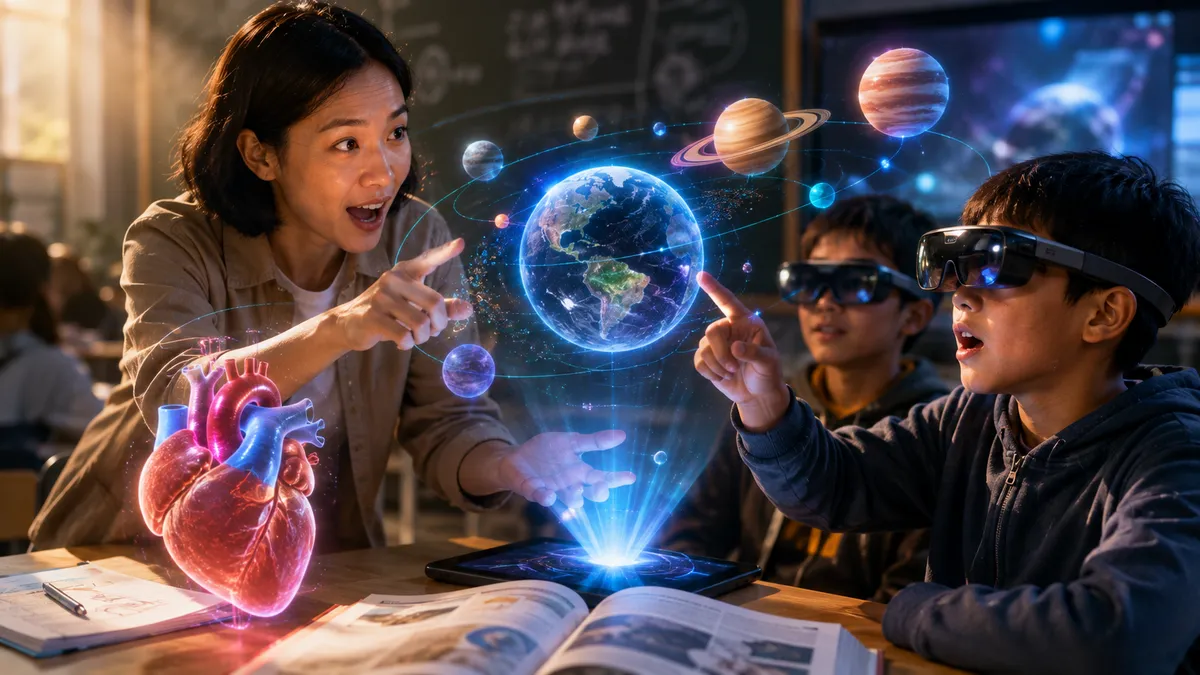
Augmented Reality (AR)—technology that overlays digital content onto the real world—is set to redefine classrooms globally. While academic research has enthusiastically tracked AR's potential for student learning in fields like STEM and gaming, a growing body of evidence suggests a critical disconnect: educational institutions are rapidly adopting cutting-edge technology without adequately preparing their teachers to use it.
A comprehensive analysis of global literature reveals that the interest in AR education has grown exponentially since 2007. Researchers have mapped thousands of papers to track how this field evolved, documenting major thematic connections and academic contributors worldwide. The volume of published work confirms that AR holds immense promise for creating immersive learning environments far beyond traditional textbooks.
However, the study’s key finding is a significant imbalance. Despite the intense focus on developing student-facing apps and tools, there is a notable scarcity of research dedicated to professional development and training programs for teachers themselves. The technology exists, but the practical frameworks needed to integrate it into daily teaching routines are missing.
More Than Just Gadgets: The Need for Practical Frameworks
The current body of work tends to treat AR as a standalone learning tool rather than an integrated pedagogical method. While certain applications show strong connections with subject-specific disciplines, the analysis indicates that educational leaders need more actionable models—blueprints for how AR should fit into lesson planning and classroom management. Simply providing students with advanced devices is proving insufficient without robust support structures.
Methodologically, the researchers processed 344 academic papers published between 2007 and 2025. By using specialized bibliometric software, they were able to map out the historical velocity of the research, identifying where the field has grown strongest and where critical gaps remain. This method provided a comprehensive view of global scholarly attention paid to AR in education.
For Augmented Reality to transition from a novel academic concept into a genuine educational revolution, the focus must shift dramatically. Educational institutions can no longer prioritize merely adopting impressive student-facing applications. The real transformation requires developing comprehensive professional development programs that empower educators. Prioritizing teacher training is not an optional add-on; it is the crucial determinant of successful implementation.
The immediate challenge for academic and policy leaders is to bridge this gap, ensuring that technological enthusiasm translates into actionable, classroom-ready expertise. By investing in teachers first, the educational world can unlock AR’s true potential and ensure that revolutionary technology serves effective pedagogy.
Read the paper here:
doi: 10.26634/javr.4.1.1273Comments (0)
Related News
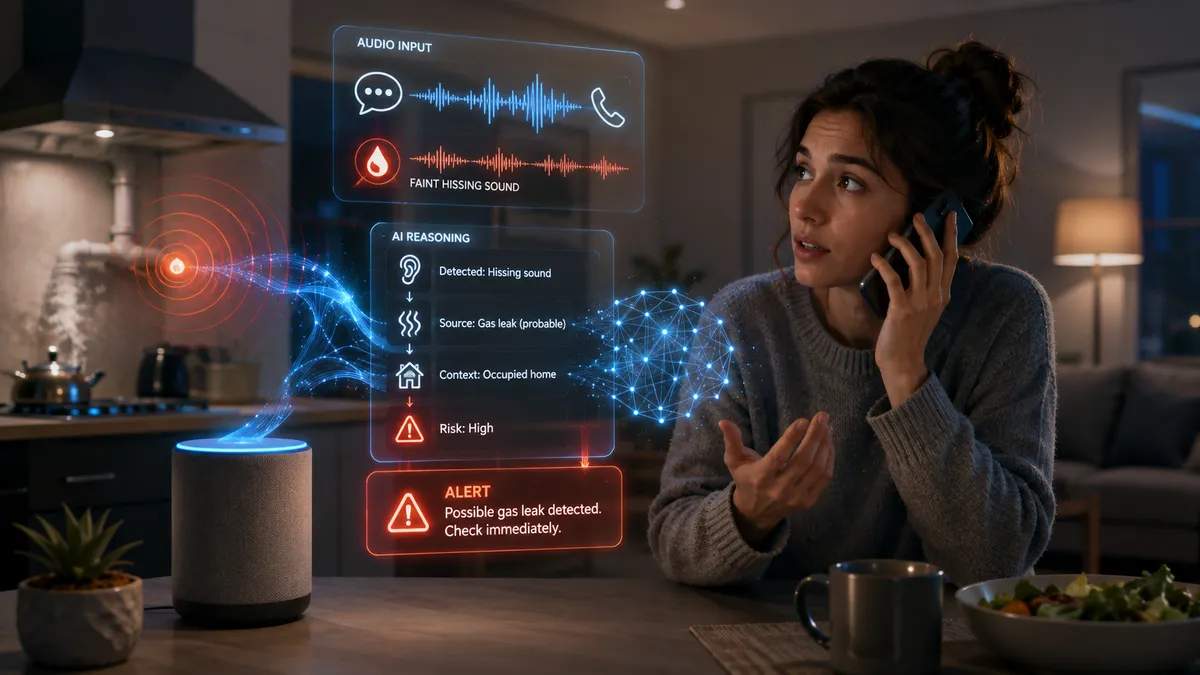
AI Now Learns to Reason From Sound: New Framework Lets Voice Assistants Understand Context, Not Just Words
Researchers have developed a system that teaches audio-focused artificial intelligence models not just to recognize speech but to perform complex logical reasoning by transferring advanced skills from text-based models — opening the door for voice assistants, industrial safety systems and healthcare monitoring to understand what we mean rather than only what we say.

High-Dose Flu Shots Cut Hospital Visits for Seniors, But Do Not Reduce Risk of Death
A landmark analysis of nearly 600,000 older adults finds that high-dose flu vaccines significantly reduce hospitalizations but show no clear benefit in preventing death — a distinction that could reshape how public health officials recommend seasonal vaccinations.

From Text to Total Immersion: AI System Builds Physically Accurate Virtual Worlds From a Single Sentence
A multi-agent system from UMass Amherst turns natural language descriptions into four-dimensional virtual worlds that obey real physics, opening new possibilities for film, gaming and robotics.
Stay ahead of the science.
Weekly research news digest, translated for curious minds.