Beyond the Screen: Why Blended Learning is Key to Bridging India's Education Divide
The forced shift to online schooling during the pandemic revealed deep educational inequalities. Experts argue that true progress requires moving beyond pure digital solutions toward a robust 'blended learning' model.
Illustration placeholder
The sudden global shift to digital schooling during the COVID-19 pandemic laid bare profound educational disparities across developing regions. For areas like Nagaland, India, the crisis revealed that simply handing out laptops was not a solution; rather, deep infrastructural, social, and pedagogical gaps needed addressing. Researchers analyzing this real-world crisis concluded that the most effective and equitable path forward is not purely digital, but a hybrid model known as 'blended learning.'
Blended learning combines the rigor of traditional, in-person classroom teaching with the flexibility and resources of digital tools. This approach acknowledges that technology is merely a facilitator, not a replacement for human connection or foundational infrastructure. The study highlighted that the biggest barriers encountered during the digital transition included poor internet connectivity, a critical shortage of devices, and insufficient preparation among teaching staff.
Systemic Barriers to Digital Education
The challenges identified were multi-layered. Beyond the technical hurdles—such as unreliable power or lack of personal computers—the analysis pointed to deep social divides. Furthermore, the effectiveness of technology hinges on whether the content is culturally relevant and accessible to every demographic. Simply adopting a digital format fails if the educational material does not resonate with local cultures or if the student population lacks foundational digital literacy.
To understand this complex issue, researchers conducted a comprehensive analysis, reviewing national educational policies (such as NEP 2020) and applying these frameworks to the specific case study of digital implementation in Nagaland. By examining existing academic literature and real-world outcomes, they built a picture of where policy meets practical reality.
Educational technology holds immense potential to boost learning quality and equity, but its success is entirely conditional. For technology to genuinely improve education, it must be underpinned by more than just policy mandates. It requires massive investment in robust digital infrastructure, coupled with inclusive governmental policies and specialized, continuous training for teachers. Without addressing these foundational issues, digital tools risk widening existing gaps rather than closing them.
Ultimately, the findings advocate for a paradigm shift. While the promise of technology is undeniable, the future of education must be anchored in the sustained, supportive structure of blended learning. This model ensures that while students gain access to the global resources of the digital world, they do not lose the essential, localized support and interaction provided by a physical classroom.
The study was published in DOI: 10.71126/nijre.v2i1.16
Read the paper here:
doi: 10.71126/nijre.v2i1.16Comments (0)
Related News
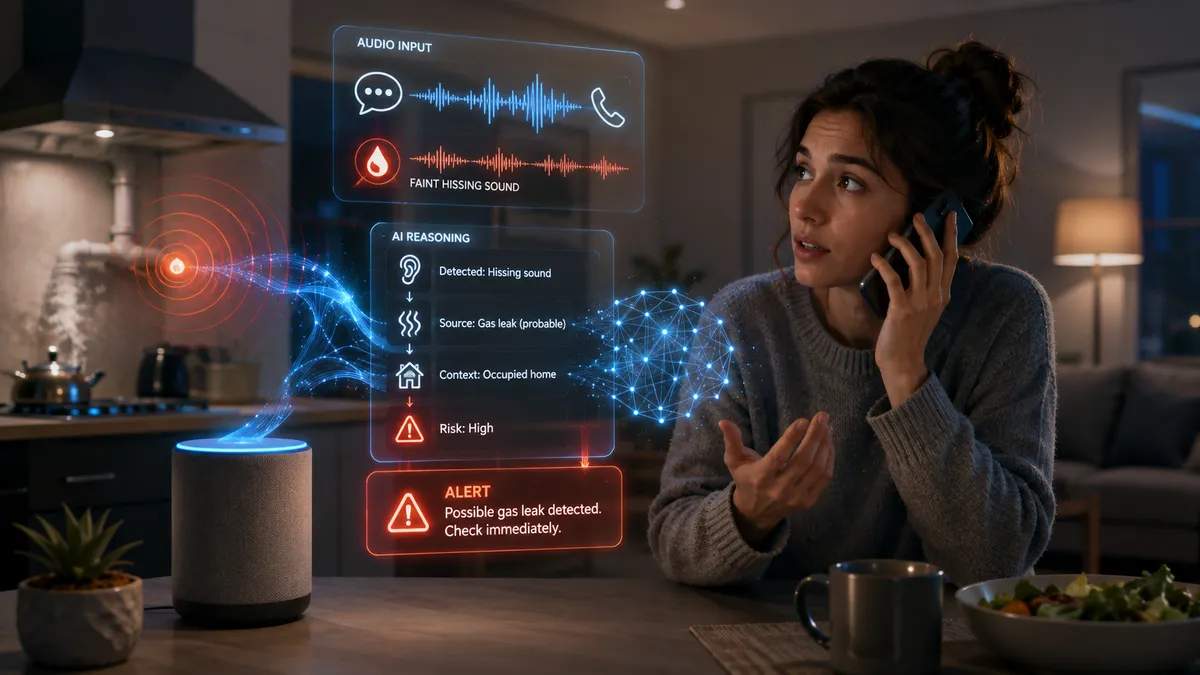
AI Now Learns to Reason From Sound: New Framework Lets Voice Assistants Understand Context, Not Just Words
Researchers have developed a system that teaches audio-focused artificial intelligence models not just to recognize speech but to perform complex logical reasoning by transferring advanced skills from text-based models — opening the door for voice assistants, industrial safety systems and healthcare monitoring to understand what we mean rather than only what we say.

High-Dose Flu Shots Cut Hospital Visits for Seniors, But Do Not Reduce Risk of Death
A landmark analysis of nearly 600,000 older adults finds that high-dose flu vaccines significantly reduce hospitalizations but show no clear benefit in preventing death — a distinction that could reshape how public health officials recommend seasonal vaccinations.

From Text to Total Immersion: AI System Builds Physically Accurate Virtual Worlds From a Single Sentence
A multi-agent system from UMass Amherst turns natural language descriptions into four-dimensional virtual worlds that obey real physics, opening new possibilities for film, gaming and robotics.
Stay ahead of the science.
Weekly research news digest, translated for curious minds.