Beyond Firewalls: How 'Digital Twins' are Making Cyber Defense Predictive
Cybersecurity is shifting from merely reacting to attacks to autonomously predicting and preventing them. New research introduces a 'Digital Twin'—a virtual replica of an entire network that dramatically boosts detection speed while maintaining data privacy.
Illustration placeholder
For decades, corporate cybersecurity relied on firewalls and reactive monitoring: build defenses, wait for the alarm, then respond. But as cyber threats become faster and more sophisticated, traditional models are failing. A breakthrough system is changing this paradigm by creating a 'Digital Twin'—a continuously updated, virtual replica of an organization’s entire network infrastructure. This technology fundamentally shifts cybersecurity from being reactive to predictive, allowing organizations to forecast and prevent breaches before they ever materialize.
The core innovation lies in building a comprehensive, simulated environment that mirrors the physical world of corporate data flow. By modeling every interconnected device, user endpoint, and data pathway, researchers can stress-test defenses against millions of hypothetical attacks without risking actual operational systems. This advanced approach dramatically improves detection speed, cutting the time required to identify sophisticated threats by an impressive 52% compared to legacy systems.
Mastering Privacy Through Shared Intelligence
A major hurdle in cybersecurity is the need for shared threat intelligence—knowing what happened at one company can help another avoid it. However, sharing sensitive data crosses legal and privacy boundaries. The new architecture solves this using federated learning. Instead of pooling raw, private network data into a central location, the system allows multiple independent organizations to train on each other’s collective threats locally. Only the resulting insights—the 'lessons learned'—are shared, ensuring that individual company data remains protected while creating a powerful industry defense shield.
Testing Tomorrow's Threats Today
Researchers developed this Cognitive Cyber Defense Digital Twin (CCDT) architecture by integrating advanced AI techniques, including graph neural networks. These tools allow the system to map out not just where an attacker could go, but every possible path they might take through a complex network. The model was rigorously stress-tested using massive public cybersecurity datasets and benchmarked against current industry standards for detection speed and false positive rates.
This technology represents a major leap in corporate resilience. Practically speaking, it means businesses can proactively run simulations to find vulnerabilities—such as weak access points or overlooked dependencies—before malicious actors ever discover them. By providing auditable proof of proactive defense testing, the system drastically minimizes potential downtime and financial losses associated with high-stakes cyber breaches.
The ultimate goal is to create a truly autonomous security ecosystem. As these digital twins mature, they promise not only enhanced detection but also automated response mechanisms that can quarantine threats or reroute data in real-time, making human intervention less necessary during the critical initial moments of an attack. This transition promises to redefine operational safety for modern global enterprises.
The study was published in [doi:10.32628/cseit251116279].
Read the paper here:
doi: 10.32628/cseit251116279Comments (0)
Related News
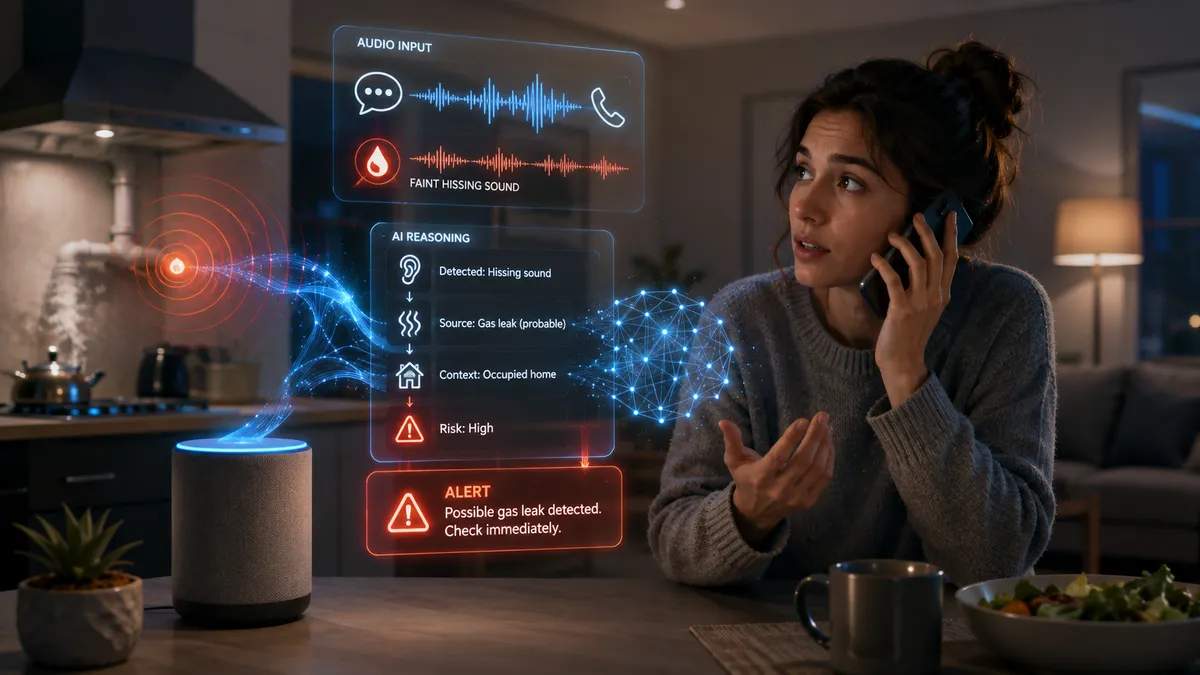
AI Now Learns to Reason From Sound: New Framework Lets Voice Assistants Understand Context, Not Just Words
Researchers have developed a system that teaches audio-focused artificial intelligence models not just to recognize speech but to perform complex logical reasoning by transferring advanced skills from text-based models — opening the door for voice assistants, industrial safety systems and healthcare monitoring to understand what we mean rather than only what we say.

High-Dose Flu Shots Cut Hospital Visits for Seniors, But Do Not Reduce Risk of Death
A landmark analysis of nearly 600,000 older adults finds that high-dose flu vaccines significantly reduce hospitalizations but show no clear benefit in preventing death — a distinction that could reshape how public health officials recommend seasonal vaccinations.
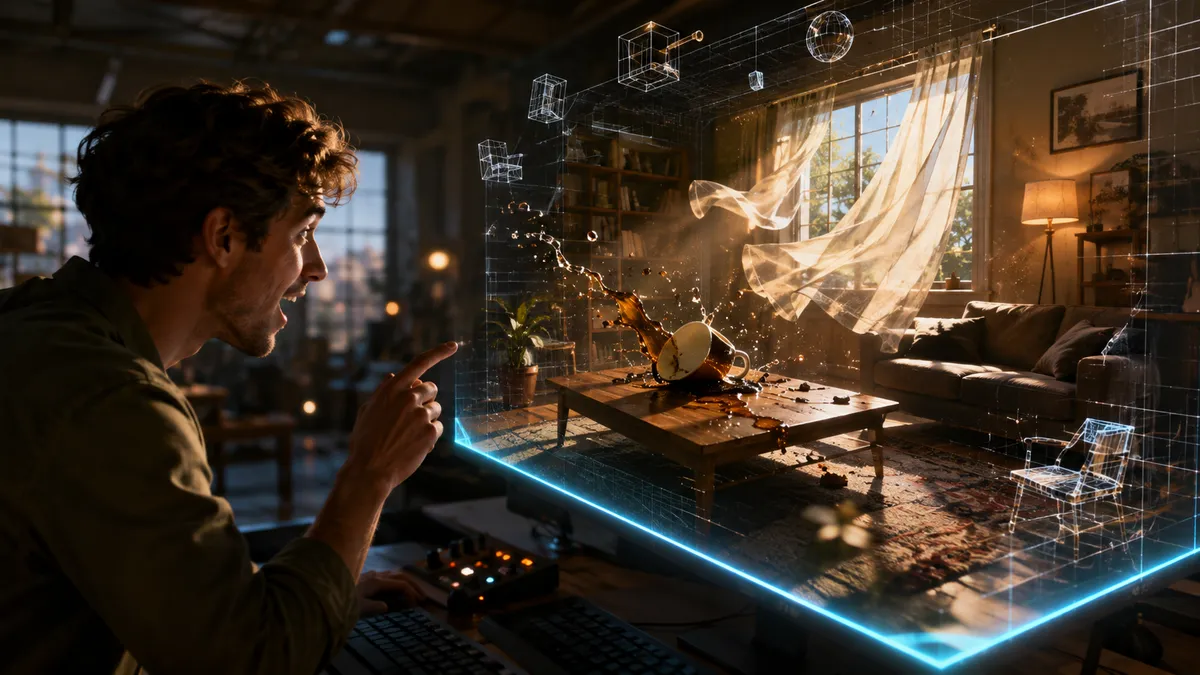
From Text to Total Immersion: AI System Builds Physically Accurate Virtual Worlds From a Single Sentence
A multi-agent system from UMass Amherst turns natural language descriptions into four-dimensional virtual worlds that obey real physics, opening new possibilities for film, gaming and robotics.
Stay ahead of the science.
Weekly research news digest, translated for curious minds.