Universities Boost Research Credibility by Ditching Dry Abstracts for Compelling Storytelling
By swapping dense academic jargon for researcher-voiced videos and visually engaging stories, universities are significantly boosting public trust and institutional prestige in an increasingly competitive higher education market.
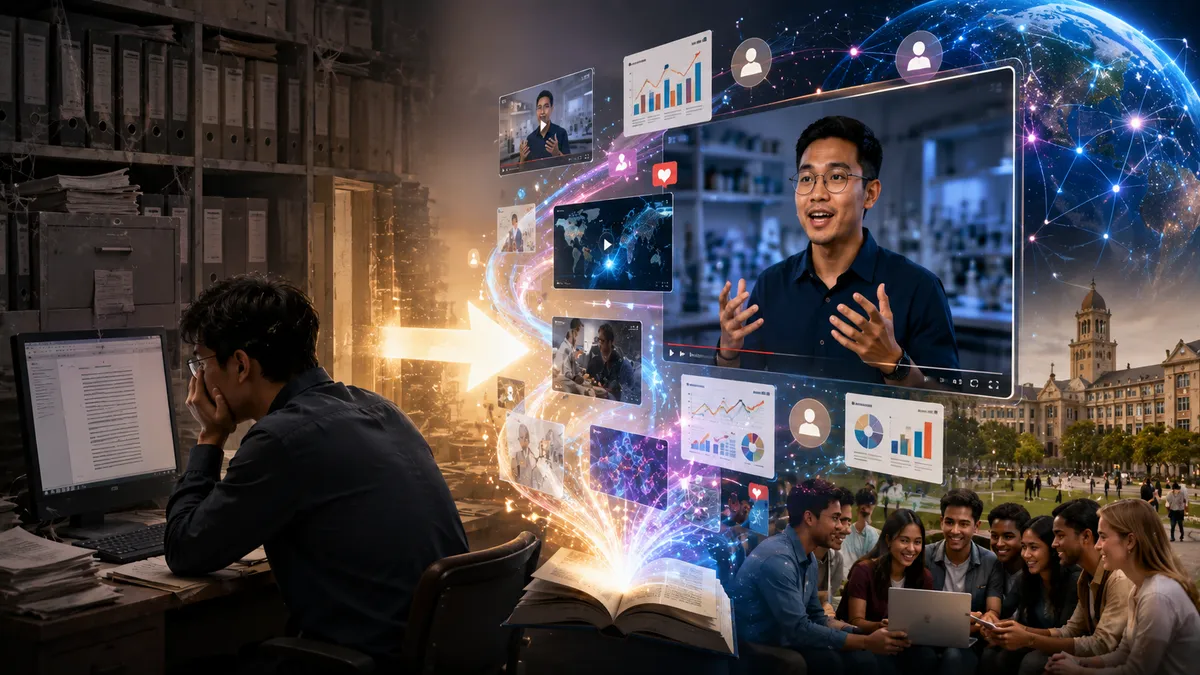
Led by researchers at the State University of Malang, the study reveals that the critical factor in elevating a university's research brand is the use of rich narrative mechanics—such as first-person storytelling and multimedia—a finding detailed in their recently revised systematic review manuscript.
The Dusty Digital Shelf
For decades, university research repositories have served as massive digital filing cabinets. They are strategic assets meant to broadcast an institution's scholarly output to the world, yet they often rely on dry, plain-text abstracts. As the higher education market grows increasingly competitive, universities are desperately seeking ways to attract talent and command research funding. The solution, it turns out, lies not just in what research is published, but in how it is packaged.
Lead Author Nabil Muttaqin explains that institutions have been missing a massive opportunity to connect with the public. We realized that universities were sitting on a goldmine of data, but presenting it in a way that actively alienated non-specialist audiences, Muttaqin says. Our analysis proves that translating complex findings into human-driven narratives directly impacts how the public judges the underlying quality of the science.
Getting Lost In The Data
The research team systematically reviewed dozens of studies and conducted a meta-analysis on experiments involving thousands of participants, revealing a consistent, positive shift in credibility when narrative formats were used.
To understand why this happens, the researchers point to a psychological concept called narrative transportation theory. Think of this as the feeling of getting completely absorbed in a great movie or a gripping novel. When people are transported by a story, they drop their critical defenses, become emotionally invested, and are more likely to believe the message being delivered. In the context of science, a researcher explaining their work directly to the camera acts as the main character, drawing the viewer in and building immediate trust.
Another driving force is signal theory. Imagine showing up to a job interview in a perfectly tailored suit; the effort you put into your appearance signals your professionalism. Similarly, when a university invests time and money into creating high-quality data visualizations or plain language summaries, audiences unconsciously view that effort as a signal that the research itself is rigorous and high-quality.
Co-Author Dio Lingga Purwodani highlights how these two concepts work together to build trust. It is a dual mechanism at play, Purwodani notes. The emotional connection of the story lowers audience skepticism, while the high production value of a video or interactive graphic signals that the institution truly values its own work.
Knowing Your Audience
While the transition to multimedia is generally positive, the researchers discovered that context is critical. Audio-visual formats, particularly videos narrated by the researchers themselves in the first person, produced the strongest boosts in perceived trustworthiness and expertise.
However, applying a one-size-fits-all entertainment approach can actually harm a university's reputation depending on who is watching. The data shows that highly entertaining formats successfully increased overall engagement, but they simultaneously reduced perceptions of scientific seriousness among audiences with lower educational attainment.
Senior Author Dwi Soca Baskara cautions against prioritizing flash over substance when disseminating scientific findings. We found that some audiences expect academic content to feel serious, and when we cross the line into pure entertainment, they question the rigor of the science, Baskara says. It is essential to tailor the storytelling medium to the specific expectations of the audience.
Rebuilding The University Brand
Looking ahead, the findings offer a clear blueprint for institutional brand managers. Rather than treating public repositories as mere archives, universities must view every publicly facing format choice as a strategic brand equity decision.
The researchers outline a practical hierarchy for institutions to follow, prioritizing highly scalable plain language summaries as the most effective baseline tool since they require no specialized production staff. For a stronger impact, short video abstracts voiced directly by the researchers generate the absolute highest credibility and trustworthiness scores among all audio-visual options. Finally, for data-heavy research that cannot easily be adapted to video, annotated data visualizations featuring contextual labels and clean graphics remain highly effective. By standardizing these storytelling formats, universities can build cumulative, long-term advantages in global reputation and public trust.
This research was supported by funding and institutional resources provided by the State University of Malang.
Read the paper here:
doi: -Comments (0)
Related News
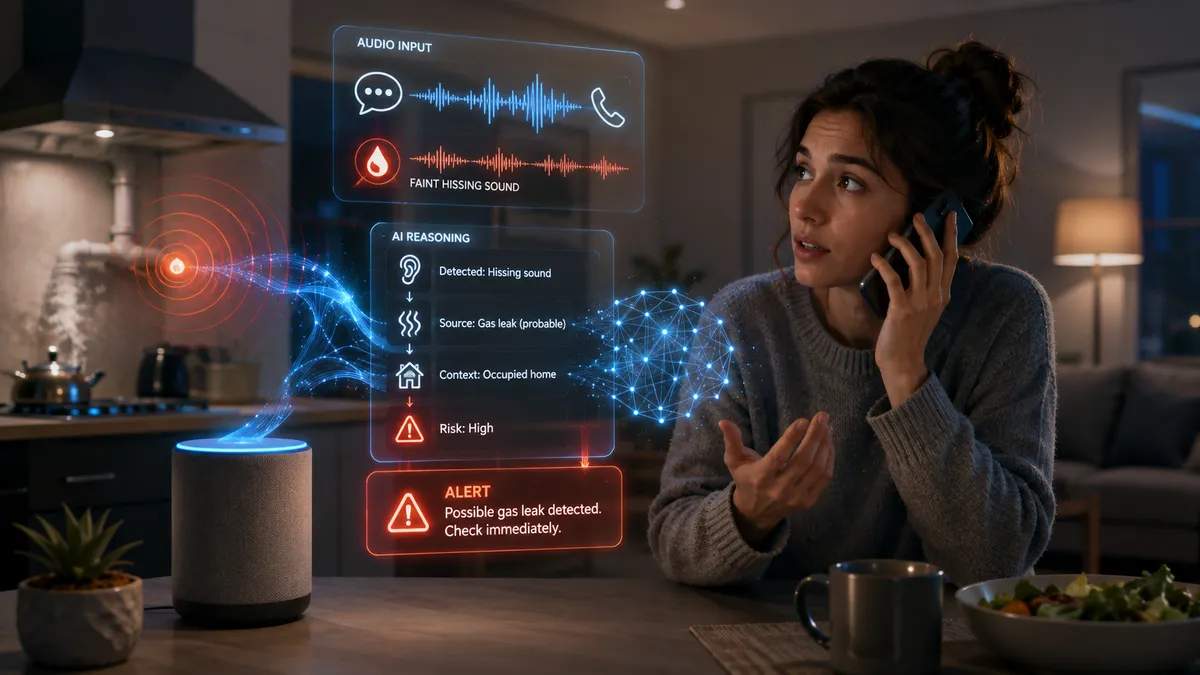
AI Now Learns to Reason From Sound: New Framework Lets Voice Assistants Understand Context, Not Just Words
Researchers have developed a system that teaches audio-focused artificial intelligence models not just to recognize speech but to perform complex logical reasoning by transferring advanced skills from text-based models — opening the door for voice assistants, industrial safety systems and healthcare monitoring to understand what we mean rather than only what we say.

High-Dose Flu Shots Cut Hospital Visits for Seniors, But Do Not Reduce Risk of Death
A landmark analysis of nearly 600,000 older adults finds that high-dose flu vaccines significantly reduce hospitalizations but show no clear benefit in preventing death — a distinction that could reshape how public health officials recommend seasonal vaccinations.

From Text to Total Immersion: AI System Builds Physically Accurate Virtual Worlds From a Single Sentence
A multi-agent system from UMass Amherst turns natural language descriptions into four-dimensional virtual worlds that obey real physics, opening new possibilities for film, gaming and robotics.
Stay ahead of the science.
Weekly research news digest, translated for curious minds.