Why Schools Must Build Audio-Visual Learning Capacity Now, Not Later!
A decade-long study of academic research shows that audio-visual instructional materials are essential for modern education, and without institutional support, most teachers cannot produce them.
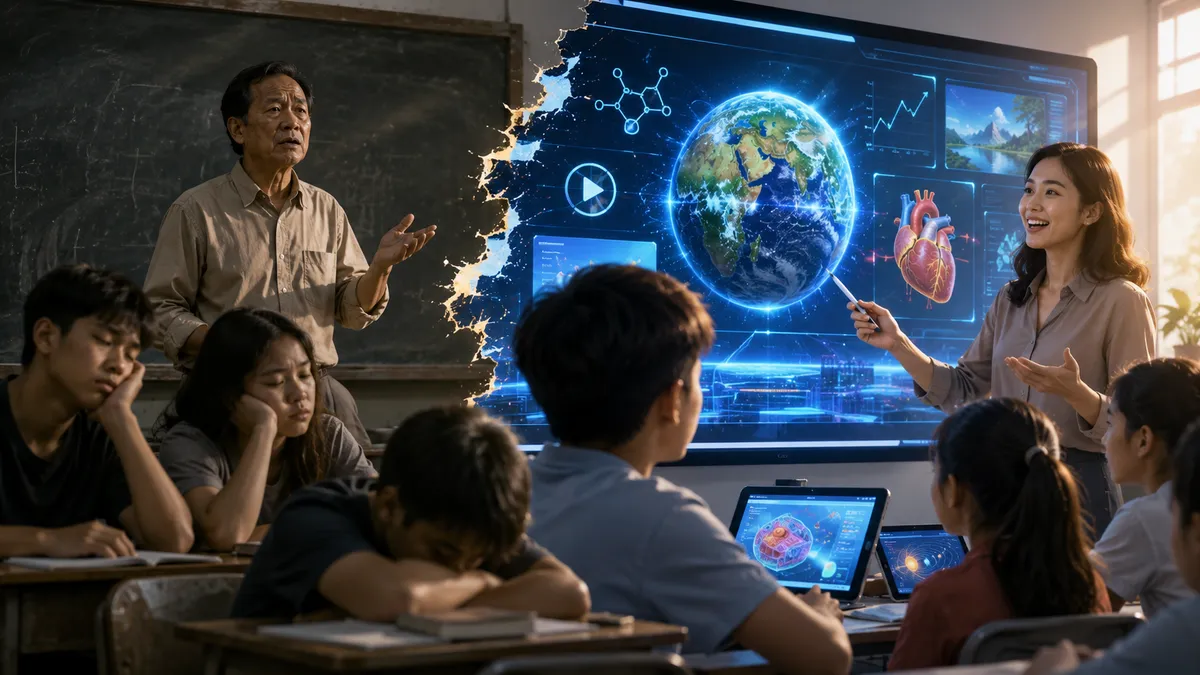
Why Schools Must Build Audio-Visual Learning Capacity Now, Not Later
A single teacher creating one video can reshape an entire classroom — but without institutional support, most educators simply cannot do it.
The shift toward audio-visual instructional materials is not a trend born of necessity; it is the new baseline for effective teaching. A comprehensive review published in Pedagogical Theory and Journal reveals that schools which fail to integrate high-quality multimedia content risk falling behind generations whose learning styles demand visual and auditory engagement from day one.
The Generation Z Learning Crisis Nobody Talks About
When a generation grows up surrounded by short-form video, interactive games, and on-demand entertainment, traditional chalk-and-talk instruction simply does not land. Researchers found that Instructional Audio-Visual content — which combines sound, visuals, narration, and animation into structured teaching materials — aligns directly with how students like those born in the 2010s absorb information.
Dio Lingga, the lead author of the study, emphasized this disconnect: Students today do not learn by memorizing static text on a page. They need to see it, hear it, and experience it — and that is exactly what IAV provides.
The Pandemic Was Not the Origin Story
While many assume the explosion of digital learning began with lockdowns in 2020, Lingga's analysis tells a different story. By reviewing nearly a decade of academic work from 2014 to 2023 across major databases including ERIC, Scopus, and Google Scholar, the findings show that IAV adoption had already been climbing well before COVID-19 hit.
The pandemic did not create demand — it accelerated an existing trajectory into full force. Since the crisis eased, usage has remained steady or grown, proving that the shift was real and irreversible. The pandemic was a catalyst, but the foundation had been there all along, Lingga noted.
Three Roles IAV Plays in Modern Education
The research identifies three distinct roles audio-visual materials serve across different learning environments. In conventional classrooms, IAV supplements face-to-face instruction by reinforcing concepts through visual aids and recorded narration, helping students who struggle with purely textual explanations to grasp complex topics faster. In online classes, it becomes the backbone of delivery — without video lectures, recorded demonstrations, or interactive media, remote education collapses into a series of static slides that most learners find disengaging. And in blended learning models — where students move between physical and digital spaces — IAV acts as the connective tissue that bridges both worlds seamlessly.
Lingga explained it simply: Think of IAV as the translation layer between teacher intent and student understanding. It ensures what is planned in a lesson plan actually reaches every learner, regardless of how they attend class.
Why Not Every Teacher Can Just Make Do
One of the most urgent findings from the review concerns teacher preparedness. Many educators have never created multimedia content before. Some lack access to editing software, recording equipment, or institutional training programs that would help them produce polished IAV materials. Without dedicated support structures in place, the result is either low-quality output that does not meet student needs — or nothing at all.
Institutions must step in by offering workshops, sharing templates and toolkits, and establishing partnerships with technology vendors who can lower the barrier to entry. The cost of doing nothing far exceeds the investment required to build these capacities. If we expect teachers to be content creators without giving them tools and training, we are setting them up for failure, Lingga stated.
Budgets, Infrastructure, and the Reality Check
Not every school can afford Hollywood-grade production immediately — and that is acceptable. The study found that format selection should match available resources, student demographics, budget constraints, and local infrastructure conditions. A rural primary school might benefit from simple animated slides with narration rather than full-motion 3D simulations used in a metropolitan university lab.
The key insight here is flexibility: institutions need to assess their specific context before choosing an IAV approach. One size does not fit all, Lingga said. A university needs different tools than a village elementary school, and the strategy must reflect that reality.
What Happens When Schools Wait Too Long
The literature review paints a clear warning for decision-makers who treat digital learning materials as optional rather than essential. Students whose schools provide no structured IAV content are at a disadvantage — they miss out on multiple sensory engagement pathways that support deeper retention and comprehension. Over time, this compounds into wider achievement gaps between well-resourced and under-resourced institutions.
The research does not suggest throwing away textbooks overnight, but it does argue that any school planning to remain competitive in the 21st century must build IAV capacity as a core infrastructure priority — alongside Wi-Fi access, device availability, and teacher training programs.
What Comes Next for Indonesian Education
Lingga concludes with a forward-looking call: schools should begin mapping their current IAV readiness, identify gaps between what they have and what they need, and design implementation roadmaps that account for budget cycles, staff schedules, and technical support limitations. The window to act is open now — before the next cohort of students arrives expecting learning experiences that match everything else in their daily lives.
The research was conducted by researcher Dio Lingga at Universitas Negeri Malang (UM). The study draws on findings from multiple international databases and contributes to ongoing pedagogical discussions within Indonesian higher education policy circles.
Read the paper here:
doi: https://doi.org/10.33830/ptjj.v24i2.6545.2023Comments (0)
Related News
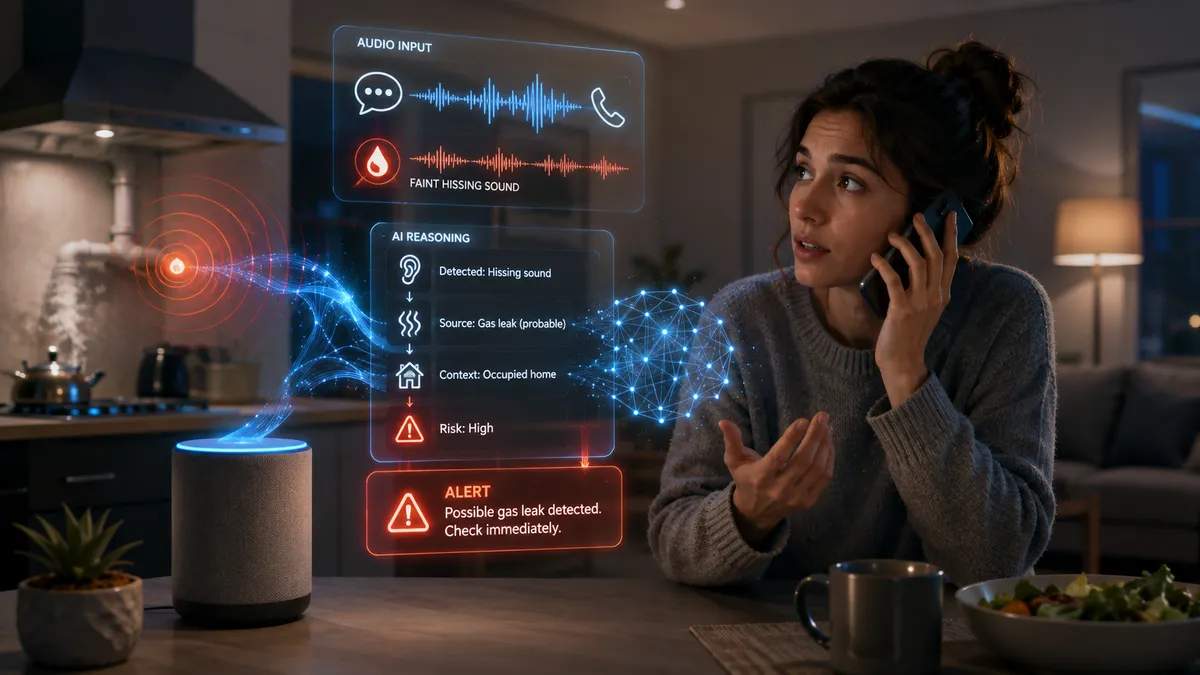
AI Now Learns to Reason From Sound: New Framework Lets Voice Assistants Understand Context, Not Just Words
Researchers have developed a system that teaches audio-focused artificial intelligence models not just to recognize speech but to perform complex logical reasoning by transferring advanced skills from text-based models — opening the door for voice assistants, industrial safety systems and healthcare monitoring to understand what we mean rather than only what we say.

High-Dose Flu Shots Cut Hospital Visits for Seniors, But Do Not Reduce Risk of Death
A landmark analysis of nearly 600,000 older adults finds that high-dose flu vaccines significantly reduce hospitalizations but show no clear benefit in preventing death — a distinction that could reshape how public health officials recommend seasonal vaccinations.

From Text to Total Immersion: AI System Builds Physically Accurate Virtual Worlds From a Single Sentence
A multi-agent system from UMass Amherst turns natural language descriptions into four-dimensional virtual worlds that obey real physics, opening new possibilities for film, gaming and robotics.
Stay ahead of the science.
Weekly research news digest, translated for curious minds.