Heart Health Showdown: Is Ivabradine Better than Metoprolol for Angina?
A new randomized clinical trial suggests Ivabradine may offer a superior alternative to common beta-blockers like metoprolol for managing chronic chest pain, particularly by reducing side effects like fatigue.
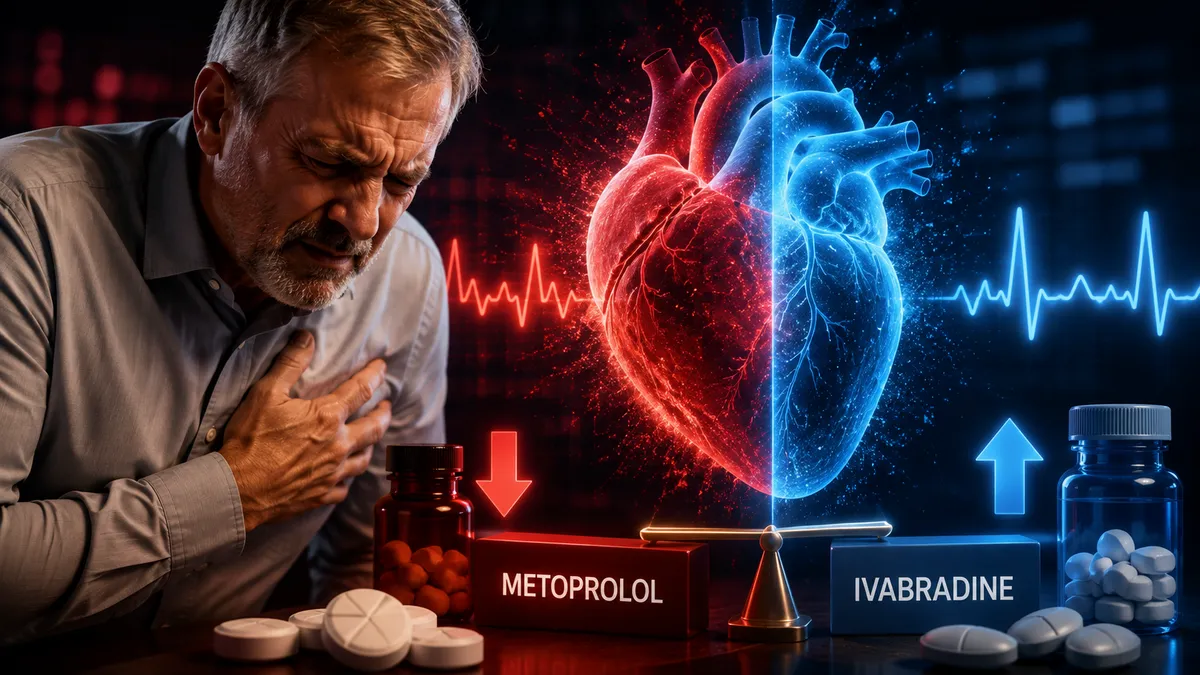
For millions suffering from stable angina—chest pain caused by reduced blood flow to the heart—drug choice is critical. A recent comparative clinical trial has cast new light on treatment options, suggesting that Ivabradine may be a highly effective and better-tolerated alternative to standard beta-blockers like metoprolol in managing chronic chest pain.
The study compared the efficacy and safety profiles of these two medications over six months using a randomized controlled design. The key finding suggests that while both drugs are potent tools for heart protection, Ivabradine demonstrated a significant advantage in reducing the overall frequency of angina attacks when benchmarked against metoprolol. Furthermore, a higher proportion of patients taking Ivabradine achieved optimal symptom control (defined as CCS Class I), indicating better quality of life improvement.
A major point of concern for both patients and physicians is tolerability. The research highlighted that patients treated with metoprolol were more likely to report symptoms of fatigue compared to their counterparts on Ivabradine. This suggests that Ivabradine possesses a favorable side-effect profile, making it an appealing option for individuals who might struggle with the common adverse effects associated with traditional beta-blockers.
Understanding the Science and the Comparison
The methodology involved enrolling 100 patients suffering from stable angina. These participants were randomly divided into two groups: one receiving Ivabradine and the other receiving metoprolol. Researchers monitored both symptom severity, heart rate reduction, and adverse effects over a six-month period to establish which drug performed better in managing symptoms while maintaining critical cardiac benefits.
The results concluded that Ivabradine was not only non-inferior—meaning it matched the effectiveness of the standard treatment—but potentially superior. This evidence provides physicians with crucial data points, allowing them to optimize care plans based not just on symptom reduction, but also on an individual patient’s specific tolerance level.
Implications for Patient Care
For general practitioners and cardiologists, this research signals a potential shift in first-line therapy recommendations. When standard beta-blockers cause debilitating fatigue or other side effects that compromise daily life, having a reliable alternative like Ivabradine can dramatically improve adherence and patient outcomes. Ultimately, the findings support a more personalized approach to managing chronic heart conditions.
The study was published in [DOI: 10.52403/ijshr.20250426].
Read the paper here:
doi: 10.52403/ijshr.20250426Comments (0)
Related News

AI Now Learns to Reason From Sound: New Framework Lets Voice Assistants Understand Context, Not Just Words
Researchers have developed a system that teaches audio-focused artificial intelligence models not just to recognize speech but to perform complex logical reasoning by transferring advanced skills from text-based models — opening the door for voice assistants, industrial safety systems and healthcare monitoring to understand what we mean rather than only what we say.

High-Dose Flu Shots Cut Hospital Visits for Seniors, But Do Not Reduce Risk of Death
A landmark analysis of nearly 600,000 older adults finds that high-dose flu vaccines significantly reduce hospitalizations but show no clear benefit in preventing death — a distinction that could reshape how public health officials recommend seasonal vaccinations.

From Text to Total Immersion: AI System Builds Physically Accurate Virtual Worlds From a Single Sentence
A multi-agent system from UMass Amherst turns natural language descriptions into four-dimensional virtual worlds that obey real physics, opening new possibilities for film, gaming and robotics.
Stay ahead of the science.
Weekly research news digest, translated for curious minds.