Beyond Grades: How Mentors Build Confidence in Future Doctors
New research reveals that the most critical element for medical postgraduates to succeed isn't just scientific guidance, but the sustained support from mentors that actively builds self-belief and psychological resilience.
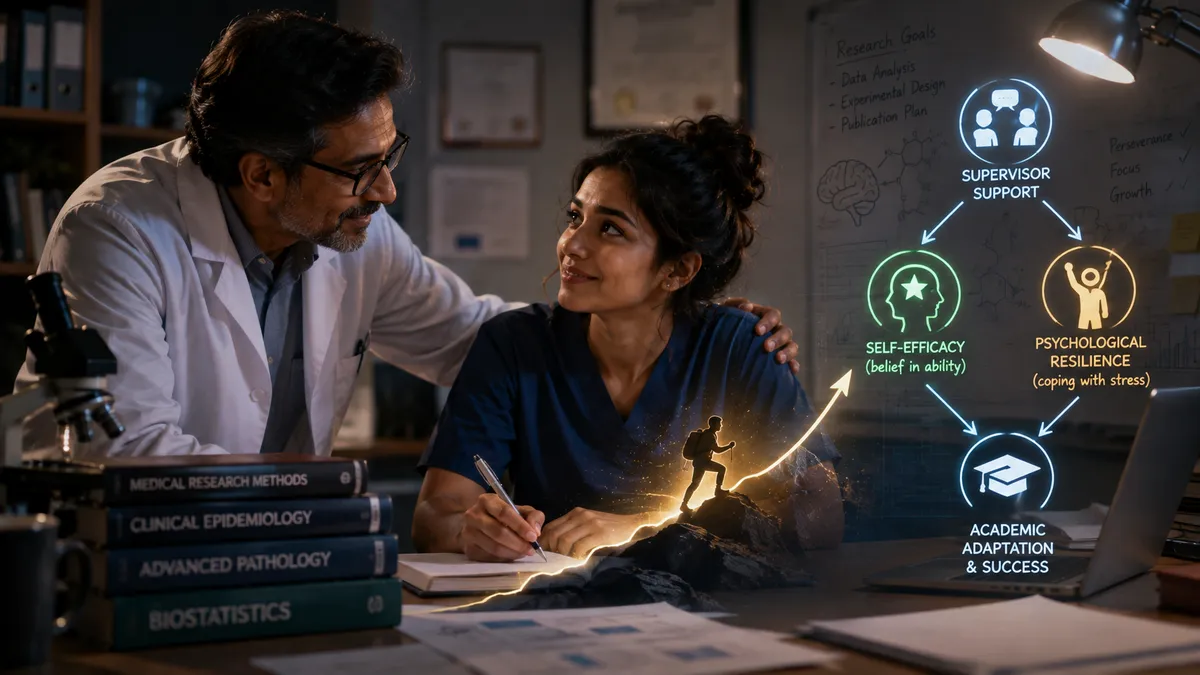
In the high-stakes world of academic medicine, succeeding in advanced research requires more than technical skill—it demands mental fortitude. A major new study tracked medical postgraduates, revealing that strong support from academic supervisors is crucial for helping students adapt to demanding research environments. Crucially, this benefit doesn't come directly; instead, the positive influence operates by boosting two fundamental internal strengths: the student’s belief in their own abilities and their capacity to cope with stress.
These findings redefine what 'good mentorship' means. While supervisors traditionally guide research topics or analyze data sets, this research highlights a deeper role: that of psychological scaffolding. The support acts as a catalyst, strengthening the graduate student's sense of self-efficacy—the belief in one's own capacity to execute tasks and achieve goals—and bolstering their psychological resilience, which is simply the ability to bounce back from setbacks.
The study surveyed an extensive group of 1,486 medical postgraduates across two universities. Using advanced statistical modeling, researchers were able to map out this complex chain of events: supervisor care leads not just to temporary academic improvement, but fundamentally strengthens the student's internal resources. These boosted self-belief and coping mechanisms are what ultimately pave the way for sustained academic adaptation and career success.
Rethinking Academic Support Structures
The real-world implications challenge academic institutions to overhaul their mentorship programs. The findings suggest that research programs must move past simply directing scientific inquiry. Instead, they must become structured environments that actively teach students how to build confidence in their skills and develop emotional resilience. This systemic approach acknowledges that burnout and self-doubt are often as significant barriers to success as the complexity of the science itself.
A Blueprint for Future Care
By focusing on these psychological foundations, institutions can create a more robust pipeline of medical talent. The next phase of research will likely focus on developing specific, measurable interventions—training modules or tailored mentorship frameworks—designed not just to teach science, but to build durable mental and emotional skills necessary for high-stakes careers. Ultimately, the message is clear: supporting the mind is as vital to a medical career as supporting the lab bench.
The study was published in [Journal/Source Not Specified].
Read the paper here:
doi: 10.1080/10872981.2026.2668765Comments (0)
Related News
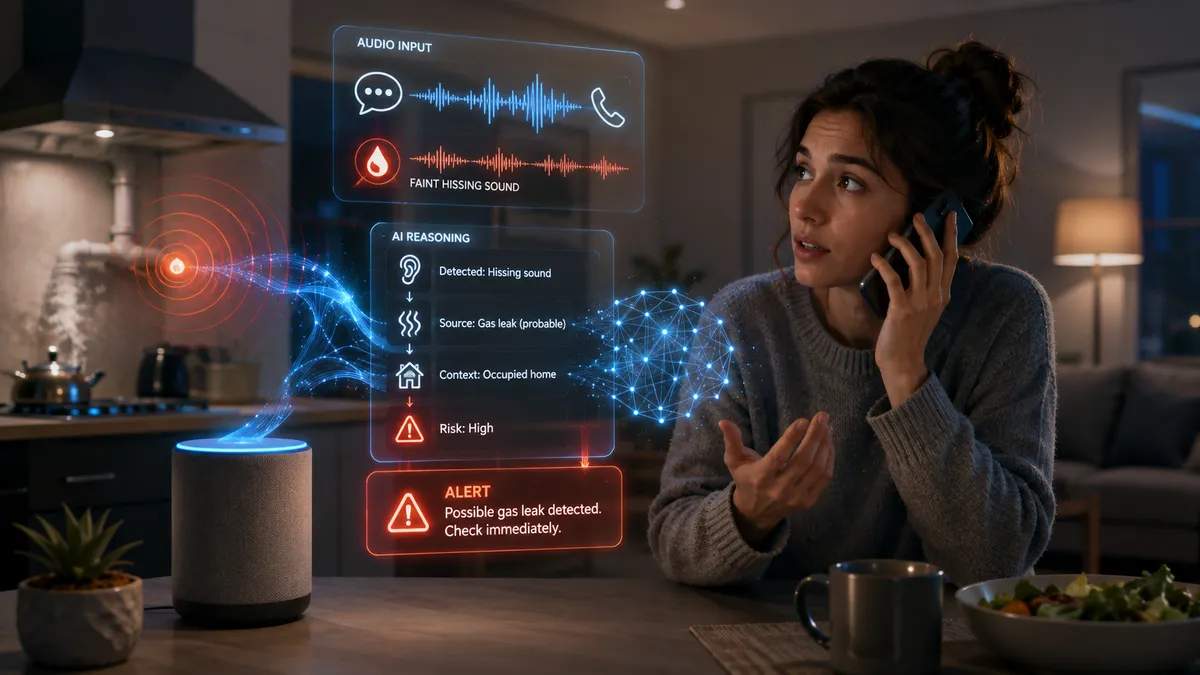
AI Now Learns to Reason From Sound: New Framework Lets Voice Assistants Understand Context, Not Just Words
Researchers have developed a system that teaches audio-focused artificial intelligence models not just to recognize speech but to perform complex logical reasoning by transferring advanced skills from text-based models — opening the door for voice assistants, industrial safety systems and healthcare monitoring to understand what we mean rather than only what we say.

High-Dose Flu Shots Cut Hospital Visits for Seniors, But Do Not Reduce Risk of Death
A landmark analysis of nearly 600,000 older adults finds that high-dose flu vaccines significantly reduce hospitalizations but show no clear benefit in preventing death — a distinction that could reshape how public health officials recommend seasonal vaccinations.

From Text to Total Immersion: AI System Builds Physically Accurate Virtual Worlds From a Single Sentence
A multi-agent system from UMass Amherst turns natural language descriptions into four-dimensional virtual worlds that obey real physics, opening new possibilities for film, gaming and robotics.
Stay ahead of the science.
Weekly research news digest, translated for curious minds.