The Power of Play: How Modern Curricula are Remaking Early Childhood Education
Systemic educational reforms are shifting the focus of preschool learning from rote memorization to interactive play, proving that hands-on experience is key to building foundational skills.
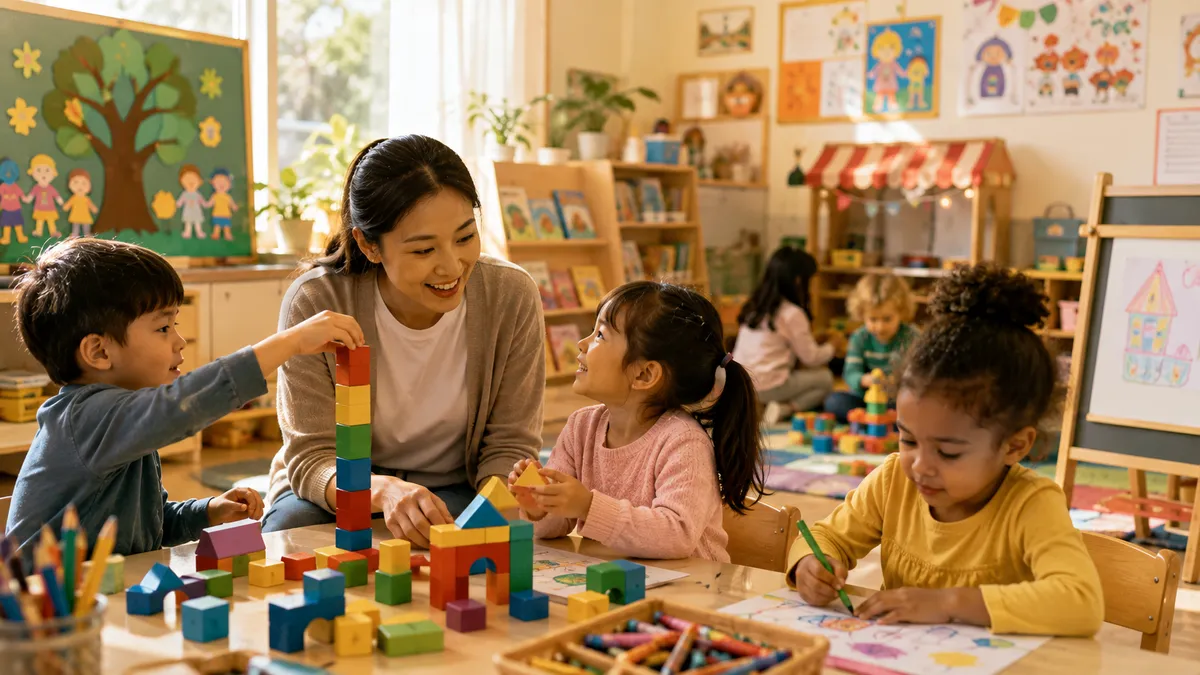
For decades, early childhood education (ECE) faced challenges with standardized teaching methods that often failed to meet the needs of developing minds. However, recent analyses of educational systems are highlighting a critical shift: true learning in preschool environments does not come from lecture, but from guided, interactive play. This realization is driving major curriculum reforms aimed at building robust foundations for future academic success.
The study examined the structure of current preschool education policies, pinpointing several systemic issues within older models. These frameworks struggled to adequately address diverse learning styles or keep pace with cognitive science advancements. In response, national guidelines—such as the 'First Step' state program—have been implemented to serve as crucial structural components. These programs are designed not just to teach content, but to guide foundational development through a more holistic lens.
The core finding is that integrating interactive teaching methods offers significant advantages for young children. Rather than treating play as mere recreation, modern pedagogy views it as the primary vehicle for cognitive growth. When learning is structured through engaging activities—whether building with blocks or role-playing scenarios—children internalize concepts like math, language, and social cooperation in a way that passive instruction cannot match.
Reform Through Evidence: Guiding Policy and Practice
The research methodology involved an extensive analysis of existing educational structures and policy reforms. By reviewing what works best in practice versus what is mandated by outdated models, the study provided evidence-based recommendations for change. The implications are profound, offering a clear roadmap for policymakers seeking to overhaul ECE curricula. For parents, it provides confidence that effective learning environments prioritize engagement over drilling; and for educators, it offers concrete methods for implementing play-based instruction.
These findings suggest that moving away from rigid, standardized testing in the early years is paramount. Instead, curriculum reform must center on supporting curiosity and adaptability. The emphasis shifts to creating educational ecosystems where children are active participants in their own learning journey, supported by curricula designed to guide—but not dictate—discovery.
This movement signals a broader significance: that effective education starts with acknowledging the natural intelligence of childhood. By embracing play as a serious academic tool, nations can better equip their youngest citizens with the critical thinking and emotional resilience necessary for a rapidly changing world. Future reforms are therefore predicted to become increasingly flexible, personalized, and deeply rooted in child development science.
Read the paper here:
doi: 10.47191/ijmra/v4-i2-14Comments (0)
Related News

AI Now Learns to Reason From Sound: New Framework Lets Voice Assistants Understand Context, Not Just Words
Researchers have developed a system that teaches audio-focused artificial intelligence models not just to recognize speech but to perform complex logical reasoning by transferring advanced skills from text-based models — opening the door for voice assistants, industrial safety systems and healthcare monitoring to understand what we mean rather than only what we say.

High-Dose Flu Shots Cut Hospital Visits for Seniors, But Do Not Reduce Risk of Death
A landmark analysis of nearly 600,000 older adults finds that high-dose flu vaccines significantly reduce hospitalizations but show no clear benefit in preventing death — a distinction that could reshape how public health officials recommend seasonal vaccinations.

From Text to Total Immersion: AI System Builds Physically Accurate Virtual Worlds From a Single Sentence
A multi-agent system from UMass Amherst turns natural language descriptions into four-dimensional virtual worlds that obey real physics, opening new possibilities for film, gaming and robotics.
Stay ahead of the science.
Weekly research news digest, translated for curious minds.