Why Workplace Conflict and Layoffs Secretly Kill Employee Morale
New research confirms that internal workplace conflict and poorly managed terminations are potent forces actively undermining employee motivation. Companies must overhaul their HR policies to rebuild trust.
Illustration placeholder
For modern businesses, the greatest threat to productivity might not be a market downturn, but the erosion of internal morale. New analysis suggests that chronic workplace strife and painful job termination events are far more damaging than previously understood, quietly siphoning away employee motivation and transforming high-performing teams into cynical workforces. The findings urge companies to view their conflict resolution policies and downsizing strategies as critical components of corporate health.
The research provides quantitative evidence showing a direct link: both ongoing internal workplace conflicts and the necessity of workforce reductions significantly depress an employee’s sense of 'work spirit.' These are not isolated issues; the study determined that when these two factors—conflict and termination—coexist, they account for the vast majority of negative changes observed in overall employee morale. This suggests a cycle where poor communication leads to conflict, which then necessitates painful policy decisions, further damaging trust.
Measuring the Damage: What Researchers Found
Researchers analyzed primary data using sophisticated statistical modeling to pinpoint exactly how these workplace dynamics impact an individual's commitment and enthusiasm for their job. Their findings confirm that simply having disagreements is detrimental, but it is the lack of structure or transparency surrounding conflict resolution—and especially the handling of departures—that creates systemic damage.
Beyond Correlation: The Science of Organizational Trust
The study employed multiple linear regression, a statistical method used to determine the strength and significance of relationships between variables. In plain terms, this allowed the researchers to move beyond simply noting that conflict and morale are related; they could quantify how much one impacts the other. The results were clear: employees do not just leave because of layoffs; they experience a deep psychological blow because the process feels unfair or opaque.
Rebuilding Trust Through Process, Not Just Policy
For companies seeking to stabilize their workforce, the implication is profound and actionable. Simply implementing new HR policies will not suffice. Organizations must prioritize proactive human resource management by establishing robust conflict resolution programs that teach healthy confrontation. Furthermore, when downsizing becomes unavoidable, procedures must be radically transparent and selective. By making termination processes predictable, fair, and empathetic, companies can mitigate much of the emotional fallout that otherwise destroys motivation.
Ultimately, maintaining a highly motivated workforce is not just about retaining talent—it’s about managing trust. When conflict resolution feels punitive or when departures are handled abruptly, organizations risk undermining their most valuable asset: the employee's belief in the company’s stability and fairness. The key to sustained success lies in treating internal health as meticulously as financial balance sheets.
The study was published in a scientific journal focusing on organizational behavior.
Read the paper here:
doi: 10.47191/ijmra/v4-i2-15Comments (0)
Related News
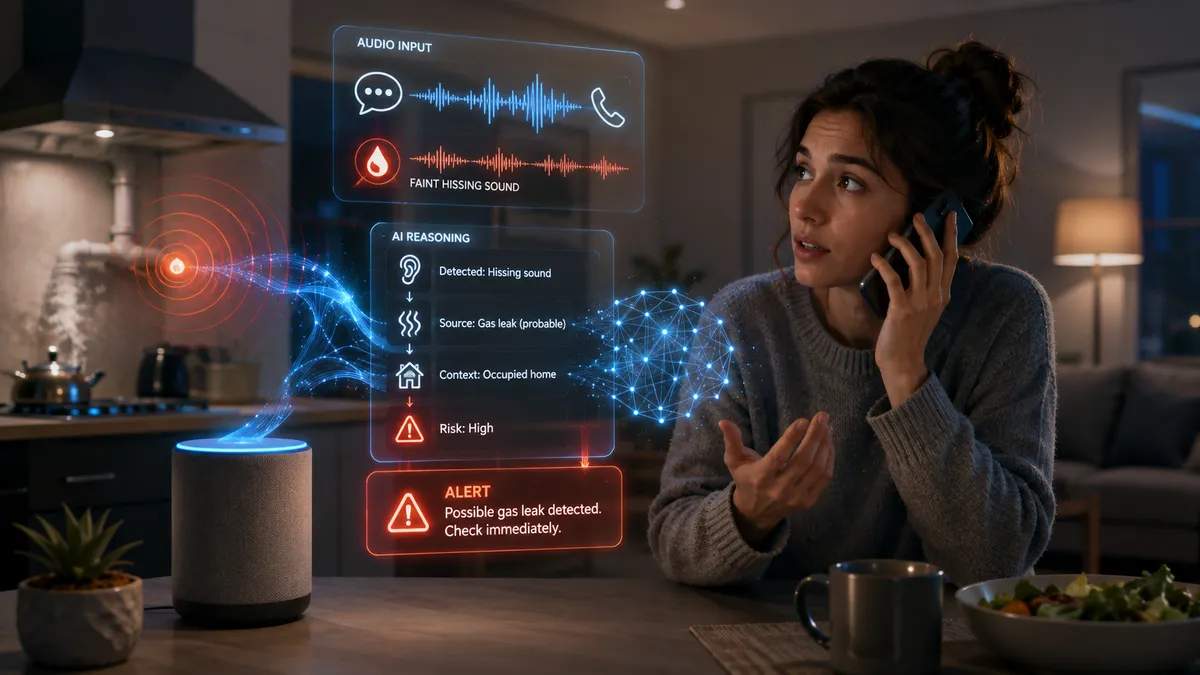
AI Now Learns to Reason From Sound: New Framework Lets Voice Assistants Understand Context, Not Just Words
Researchers have developed a system that teaches audio-focused artificial intelligence models not just to recognize speech but to perform complex logical reasoning by transferring advanced skills from text-based models — opening the door for voice assistants, industrial safety systems and healthcare monitoring to understand what we mean rather than only what we say.

High-Dose Flu Shots Cut Hospital Visits for Seniors, But Do Not Reduce Risk of Death
A landmark analysis of nearly 600,000 older adults finds that high-dose flu vaccines significantly reduce hospitalizations but show no clear benefit in preventing death — a distinction that could reshape how public health officials recommend seasonal vaccinations.

From Text to Total Immersion: AI System Builds Physically Accurate Virtual Worlds From a Single Sentence
A multi-agent system from UMass Amherst turns natural language descriptions into four-dimensional virtual worlds that obey real physics, opening new possibilities for film, gaming and robotics.
Stay ahead of the science.
Weekly research news digest, translated for curious minds.